
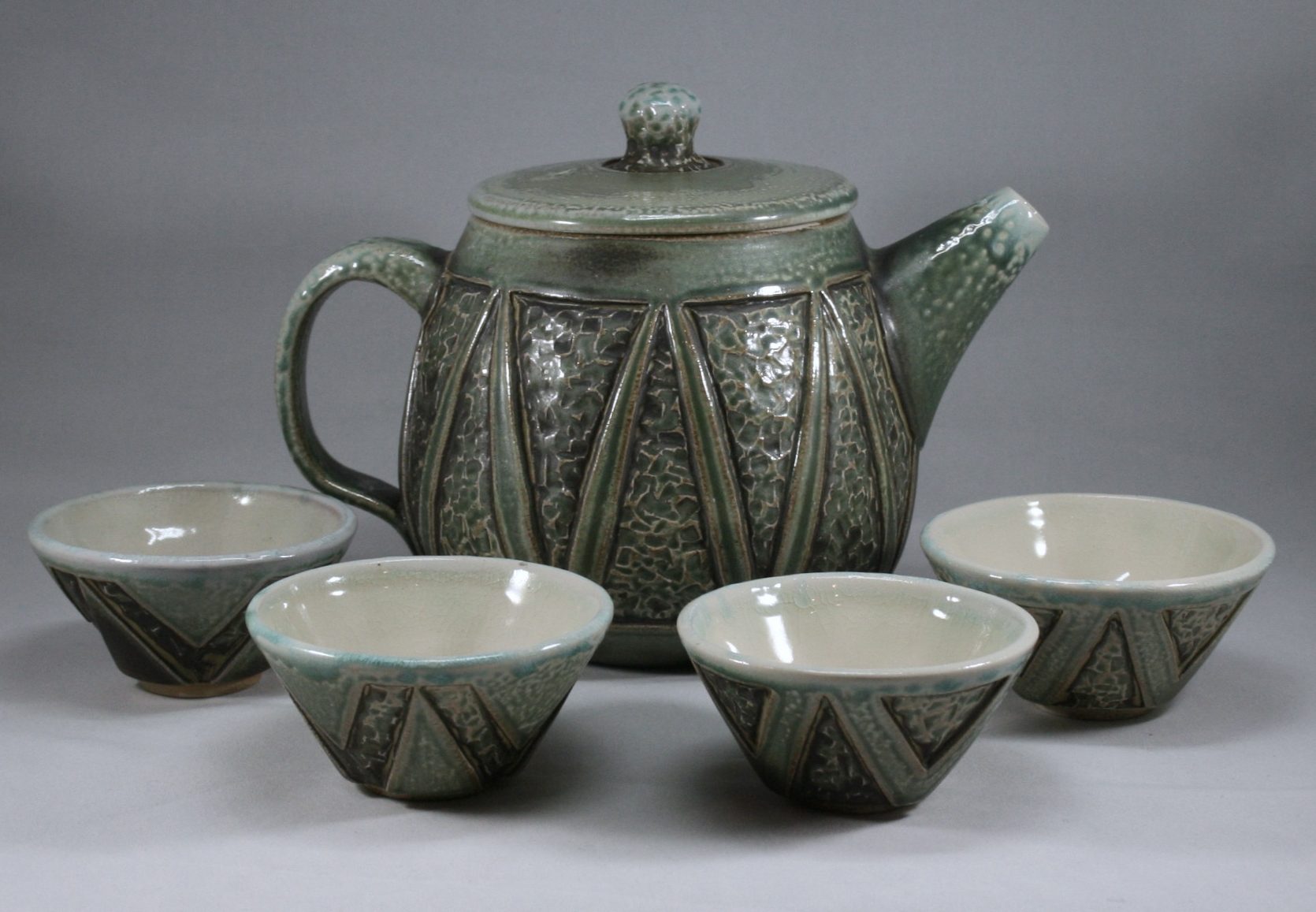
Early in my artistic career I found myself drawn to the medium of clay. I am intrigued by how it requires the artist’s complete engagement with the materials throughout the entire process of creation. Clay is tactile, it is incredibly responsive, and it requires the sense of touch as much as that of sight. Touch is essential to the process of creation, and it is equally essential to the viewer/handler’s understanding of the work. In the western world we are taught from an early age to look with our eyes not with our hands. However, having a tactile relationship with my pottery–throughout the creation and after completions–gives me a deeper connection to my art, and I hope that it will do the same for those who encounter it. This is also why I choose to create primarily functional ware. I want my work to be a part of daily experience. I want the owners to handle and use each piece, to recall the long and close connection between humans and ceramics.
“…the sense of touch is vitally important in the appreciation of any plastic art, sculpture no less than pottery. But we Westerners are not allowed to handle things in our museums; we have been brought up in a culture dominated overwhelmingly by graphic images addressed solely to the eye.”
Philip Rawson, Ceramics
My interest in touch led me to begin carving the surfaces of my ceramics. When I am carving I can feel the sharp edges of my tools, the contours of the vessel as I work around it, the consistency of the clay as I cut through it. I feel very connected to the piece as I explore every curve and hollow; as I work the surface itself becomes three dimensional. This carved surface is visually compelling, while also demanding the tactile interaction of the viewer.
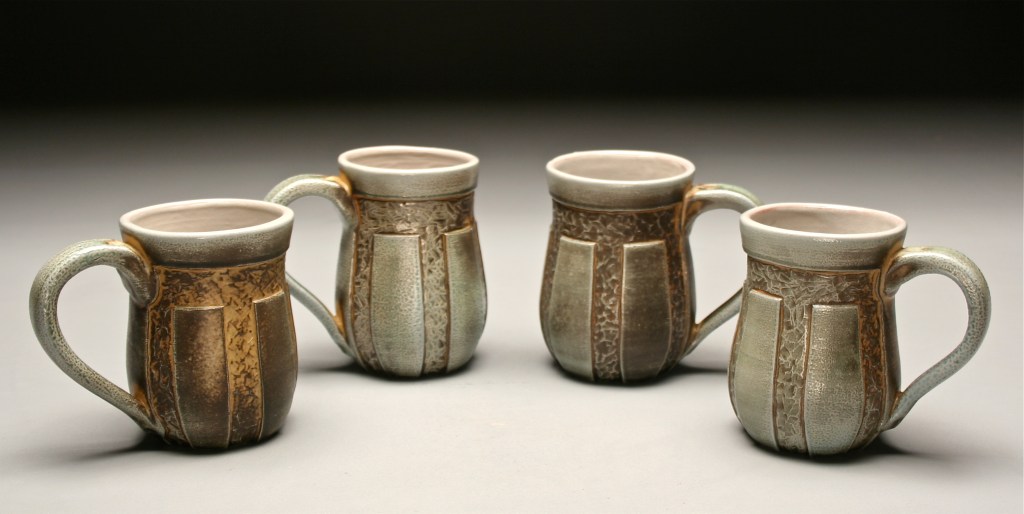
To enhance the texture and surface complexity of my pieces, I soda fire my work. This is a process where a solution of soda ash is sprayed into the kiln while at a high temperature; the sodium vaporizes and combines with the silica in the surface of the clay creating layers of sodium-silicate glaze. This type of atmospheric firing–similar to wood firing–creates a varied surface texture and appearance and interacts with the pot itself and the carved surfaces in fascinating and sometimes surprising ways.
“The qualities of texture may appeal to sight as well as to our sense of touch if the texture scale is broad enough, especially when it is deliberately made. Tactile qualities can either be fortified by visual experience, or even inferred and experienced synaesthetically from sight alone.”
Philip Rawson, Ceramics
 Sarah Reesor Ceramics